Understanding China Through Its Most Connected Innovation and Manufacturing Ecosystem
When international companies think about doing business in China, Shanghai is often the first city that comes to mind.
That makes sense. Shanghai is one of China’s most internationally connected economic, financial, trade and innovation centers.
But there is a strategic mistake that overseas companies sometimes make:
They look at Shanghai as a destination, rather than as a gateway to a much larger regional ecosystem.
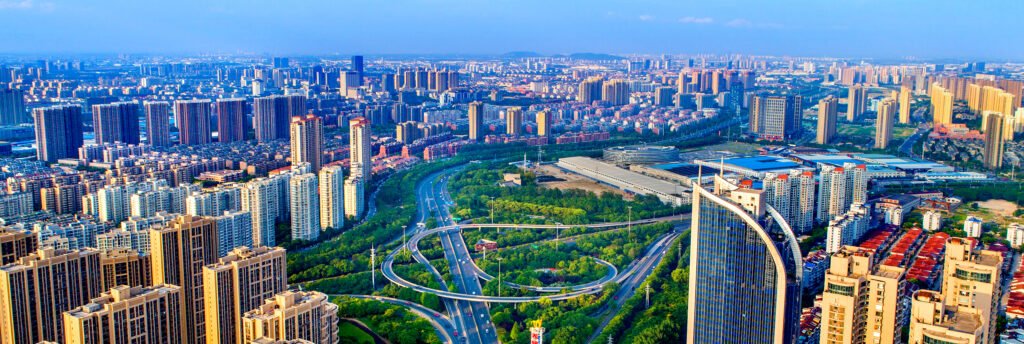
Just beyond Shanghai lies the Yangtze River Delta — a highly integrated economic region covering Shanghai and the provinces of Jiangsu, Zhejiang and Anhui.
For companies looking to understand China’s manufacturing capabilities, technology ecosystem, supply chains, innovation landscape and business environment, the Yangtze River Delta deserves much more attention.
A Region, Not Just a Group of Cities
The Yangtze River Delta is not simply a collection of neighboring cities.
Its development has increasingly focused on regional integration, connectivity, technological innovation and industrial collaboration.
The region covers approximately 358,000 square kilometers and includes Shanghai together with Jiangsu, Zhejiang and Anhui. National development strategies emphasize strengthening technological innovation, integrating technological and industrial innovation, improving infrastructure connectivity and building a globally competitive innovation ecosystem.
This matters for international businesses because China’s industrial capabilities are rarely concentrated in a single city.
A company may have its headquarters or R&D center in one location, its manufacturing partners in another, specialized suppliers somewhere else, and its customers or investors in another city.
The Yangtze River Delta makes it possible to understand these relationships within one interconnected regional ecosystem.
Why the Region Matters to International Companies
- Manufacturing and Innovation Exist Side by Side
One of the most interesting characteristics of the Yangtze River Delta is the combination of advanced manufacturing, engineering capabilities, technology companies and modern services.
Jiangsu, for example, is one of China’s major economic and industrial provinces and an important part of the integrated Yangtze River Delta development strategy.
For overseas companies, this creates opportunities to explore more than finished products.
A well-designed China business visit can go deeper:
- How are products engineered and manufactured?
- How do Chinese suppliers collaborate with technology companies?
- Where are emerging industrial technologies being commercialized?
- How are traditional manufacturers responding to digital transformation?
- What can international companies learn from China’s speed of commercialization?
These questions are often more valuable than simply visiting a factory.
- The Supply Chain Is the Real Story
China’s competitive advantage cannot always be understood by looking at individual manufacturers.
The more important question is often:
What does the surrounding ecosystem look like?
A single industrial cluster may include component suppliers, equipment manufacturers, software companies, logistics providers, research institutions, universities, system integrators and downstream customers.
This is one reason the Yangtze River Delta can be particularly valuable for international business delegations.
Instead of looking at one company in isolation, visitors can potentially understand how an entire industrial ecosystem operates.
For companies exploring sourcing, partnerships, technology cooperation or market opportunities, this ecosystem perspective can lead to better questions — and better decisions.
- Connectivity Changes the Way Business Visits Can Be Designed
Regional integration also changes the practical economics of business travel.
The Yangtze River Delta has continued to develop an extensive high-speed rail and transportation network. The regional railway network exceeded 15,000 kilometers, with high-speed rail accounting for nearly half of the network, further strengthening connections among Shanghai, Jiangsu and Zhejiang. (国务院)
For an international delegation, this creates an important advantage.
A China business program does not necessarily need to be limited to one city.
A carefully designed itinerary can combine different types of experiences:
Shanghai → Suzhou → Wuxi → Nanjing
or
Shanghai → Hangzhou → Jiaxing → Suzhou
depending on the objectives of the visiting organization.
The goal should not be to visit as many cities as possible.
The goal should be to connect the right cities, companies and people around a specific business question.
- China Is Not One Market
This may be one of the most important lessons for companies entering China.
China should not be treated as a single, uniform business environment.
Different regions have different industrial strengths, entrepreneurial cultures, consumer markets, government priorities and innovation ecosystems.
The Yangtze River Delta is particularly relevant for companies interested in areas such as:
- Advanced manufacturing
- Industrial technology
- Artificial intelligence
- New materials
- Smart manufacturing
- Green technology
- Consumer products
- Digital transformation
- Automotive and mobility
- Life sciences and healthcare
- Cross-border business cooperation
The Chinese government’s current development priorities also continue to emphasize advanced manufacturing, modern services, new and high technology, and energy conservation and environmental protection as important areas for foreign investment. (国务院)
This does not mean every international company should enter China through the Yangtze River Delta.
It means the region deserves to be evaluated strategically rather than overlooked simply because the company is more familiar with Beijing, Shanghai or Shenzhen.
From “Visiting China” to “Understanding China”
There is a fundamental difference between a business trip and a China experience.
A business trip may consist of:
Airport → Hotel → Meeting → Factory → Dinner → Airport
A meaningful China experience asks different questions:
Who should we meet?
Why should we meet them?
What should we learn?
Which industrial ecosystem should we explore?
What assumptions about China should we test?
What potential partnership could emerge?
This distinction is particularly important for companies that are still in the exploration stage.
Before making an investment, entering a market or developing a partnership, decision-makers often need something more valuable than another presentation.
They need first-hand context.
What International Companies Can Explore
A well-designed China experience can combine several dimensions.
Business & Industry
Meet companies, manufacturers, technology providers and industry organizations relevant to a specific sector.
Innovation
Explore how Chinese companies approach commercialization, product development, automation and digital transformation.
Manufacturing
Go beyond the factory floor and examine the supplier ecosystem, production processes and industrial capabilities behind a product.
Market Understanding
Experience China’s business environment through direct observation rather than relying entirely on reports and presentations.
Cultural Context
Understand how business relationships, communication styles and local business practices influence cooperation.
Business Connections
Create opportunities for meaningful conversations with potential partners, suppliers, customers, investors or ecosystem organizations.
The value is not in the number of meetings.
The value is in the relevance of the connections.
Why We Start with the Yangtze River Delta
At Ming Yue International, we believe that understanding China requires more than arranging a schedule.
Our role is to help international companies and professional groups explore China through purpose-driven business and cultural experiences.
Based in Hong Kong and connected to the Yangtze River Delta, we focus on designing customized China programs around each client’s objectives.
Depending on the project, this may include:
- Company visits
- Industry learning programs
- Innovation exploration
- Business exchanges
- Market discovery
- Customized business delegations
- Cultural experiences
- Local coordination and project management
We do not believe in one-size-fits-all China itineraries.
A technology company should experience China differently from a university delegation.
An industry association should have different objectives from an investment group.
And a company exploring a potential China partnership should not follow the same program as a company simply looking for suppliers.
The starting point should always be the question: What do you need to understand about China?
From there, we build the experience.
The Bigger Opportunity
China’s business environment is changing.
Foreign investment remains an important part of China’s economic strategy, while the country continues to emphasize high-level opening-up and improved support for foreign businesses. In the first five months of 2026, China recorded more than 25,000 newly established foreign-invested companies, while high-tech foreign investment continued to grow.
At the same time, Chinese companies are increasingly international.
This creates a two-way opportunity:
International companies want to understand China.
Chinese companies want to connect with the world.
The next stage of China–international business cooperation will therefore require more than transactions.
It will require understanding, trust and meaningful connections.
And that is where a well-designed China experience can create value.
Start with the Right Questions
If your organization is considering China, you do not necessarily need to begin with a large market-entry project.
You can begin with a focused question.
What industry do we want to understand?
Which companies should we meet?
Which region gives us the best perspective?
What assumptions about China should we test?
What relationships could be worth developing?
For many organizations, the Yangtze River Delta can be a powerful place to start.
Not because it represents all of China.
But because it provides a particularly rich window into the country’s manufacturing, innovation, technology and business ecosystem.
Explore China with Purpose
Ming Yue International helps international companies, organizations and professional groups design customized China experience programs focused on business discovery, industry learning, innovation exploration and meaningful connections.
Experience China with purpose. Connect with confidence.